Nintex DocGen
Generate documents from business information and templates. Document generation can support a process that needs a consistently structured output assembled from available data.
When to consider it
Consider which documents you produce, where the information comes from and who must review the output. Generation, storage, approval and signing are distinct requirements to agree.
Use Nintex DocGen to connect data and templates
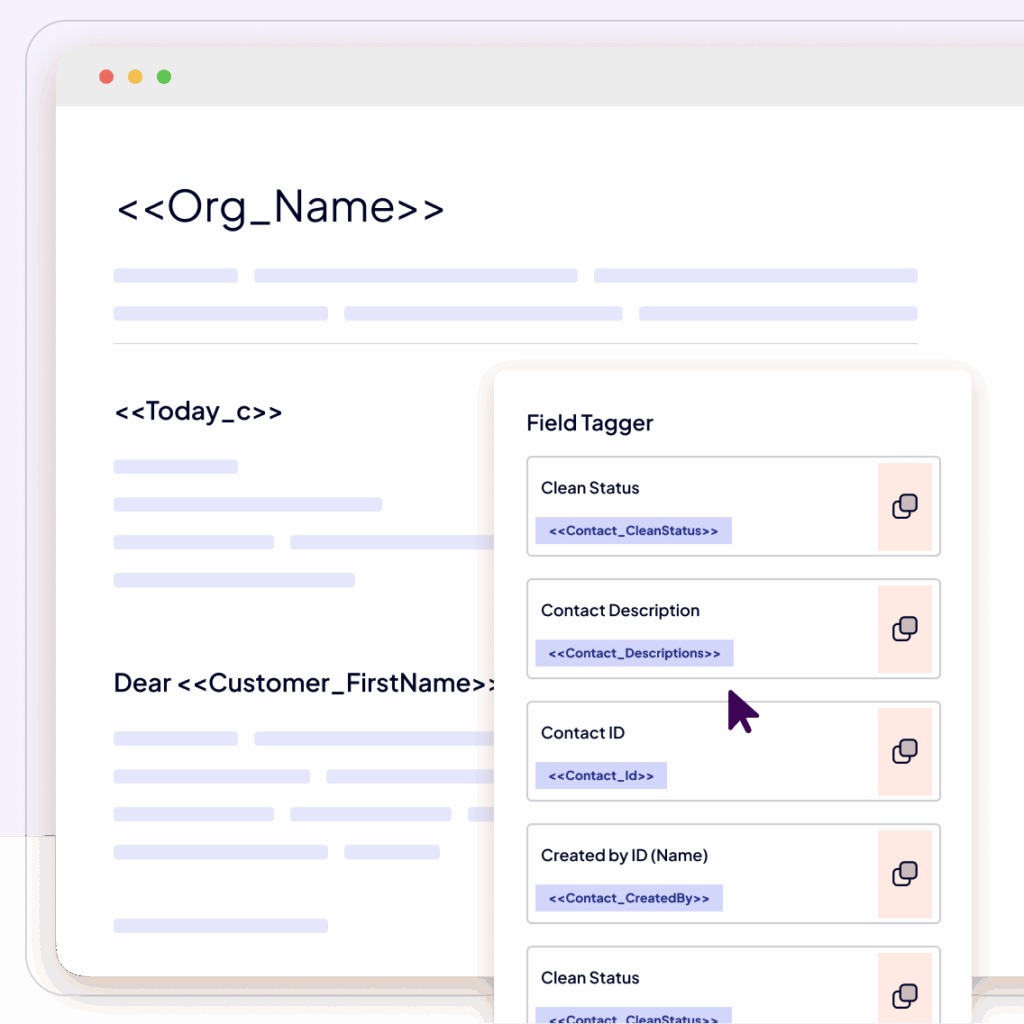
Nintex DocGen combines business information with document templates. Dynamic fields let a template use values from a record, helping a process produce a consistently structured document. This can be useful for proposals, agreements and other documents that repeatedly use information already held in a system.
Start with the output that people need. Identify which parts remain fixed, which values change and where those values come from. Then agree who reviews the document and what happens once it has been generated. These decisions shape the wider process around the template.
Define the full document process
Document generation is one step. Storage, approval, distribution and electronic signing may require additional capabilities or integrations. Treat these as explicit requirements so that a licensing discussion covers the intended result.
For a Nintex DocGen proposal, share the document types, source systems, users and expected usage. There is no need to provide confidential documents in an initial enquiry; a description is enough to start. We clarify product fit and licence requirements, while implementation, template development and integration services are agreed separately.
Licensing and next steps
We help clarify your document-generation requirements and provide a licensing proposal. Product edition, deployment context and integration scope are confirmed during the discussion.
Licence packaging, availability and terms are confirmed in the proposal.
